
Writing Realistic Military Thrillers: How Authenticity Shapes Modern Fiction
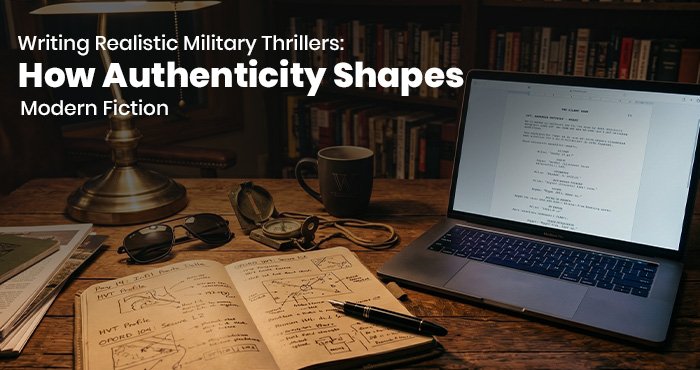
There is just something about the military thriller genre that hooks the reader right from the opening pages of the book. It is the drama of a plot line that is charged with high stakes and an overwhelming sense that disaster is imminent and only you can prevent it. What sets a compelling thriller apart from a lackluster one? Most often, it is authenticity.
Writing realistic military thrillers is not just about putting soldiers and weapons on the page. This is all about putting the reader right into the story in the middle of the action, in the heart of the turmoil, even in the head of a character who has spent their entire life preparing for one moment. It’s the ability of the author to write it all down with authenticity that gives rise to a living, breathing story, which cannot be faked through good dramatic writing skills.
Why Authenticity Is the Heart of Every Great Military Thriller
Military fiction readers are sophisticated. They either have served in the military themselves, know people who have, or have been reading in the military fiction genre for many years now. In short, they are aware when something is amiss. An incorrectly functioning weapon, an unusual and unrealistic ranking, or even a combat sequence where it seems like the writer is trying to follow some Hollywood formula rather than real-life rules and regulations.
When a writer gets all those details correct, he creates a believable piece of military fiction. In the process, he earns the trust of his readers. He shows them the reality behind the scenes and gives his characters depth and credibility. The story will become realistic and believable. In turn, the readers will feel respected by the writer and continue reading because of their faith in him.
However, this does not mean that writers need prior knowledge of military life in order to successfully create military fiction. What they need is to put in research beforehand and ask the right questions.
Research Is What Makes Military Thriller Writing Tips Actually Work
Every piece of advice about writing realistic military thrillers comes back to one thing: research. No shallow study here. Digging deep into the subject. Getting into the lives of war veterans through their autobiographies. Looking at interviews of ex-intelligence officers. Learning about mission structure, command structure, and the way soldiers’ minds work.
The best thriller authors treat research like a job. Tom Clancy was famous for his deep technical knowledge. His readers trusted him because he wrote about submarines and aircraft carriers the way someone who had actually been inside them would. That level of detail did not come from imagination — it came from years of serious reading and conversation with real sources.
When you research well, your writing changes. Your dialogue sounds different. Your action scenes move differently. Your characters carry a kind of lived-in quality that readers can sense even if they cannot explain exactly why. Good research does not just make your facts correct — it gives your whole story a feeling of truth.
Building Characters Who Feel Like Real Soldiers
One of the biggest pitfalls of military writing is depicting soldiers as invincible, indomitable, and infallible superheroes straight out of a comic strip. But real soldiers are human beings who can be scared, indecisive, second-guess themselves, and have to bear the burden of their past decisions. They may have trouble trusting their commanding officers, miss their loved ones, and struggle to see the point of being there.
To make your military fiction come to life, you will have to think hard about the internal conflicts that the main character must go through. The best military novels and stories do more than show action scenes; they create a fully-fledged personality. What values does your main character hold dear? What fears haunt him? How has his past shaped his present reactions to stressful situations?
Political thriller storytelling in particular depends on morally layered characters. The greatest tales are those where there aren’t black and white heroes and villains, but where the characters have to make difficult decisions with no perfect choices. Such complexity makes the reader think about the novel for many years to come.
How to Write Action Scenes That Feel Real, Not Cinematic
It is the action scenes, however, where most authors falter. Too many military fiction books portray action scenes in a manner similar to that of Hollywood action films: loud explosions, adrenaline-fueled heroics without fatigue, and catch phrases shouted at the apex of a battle. However, such scenarios are inaccurate representations of combat situations, and any reader savvy enough to recognize the disparity is likely to set the book aside.
Writing the action scenes requires thinking about the experience through the sense of the soldier involved. Action scenes must account for sound, smell, and feel. Combat is loud, chaotic, and taxing on the body. Decisions are made based on incomplete information, hesitation can lead to fatal consequences, and things do not always go according to plan. These kinds of action scenes are exponentially more engaging than anything Hollywood has produced.
Here are a few tips for crafting military fiction action scenes:
- Pacing is important – Keep sentences short and choppy during intense moments. Give space for the reader to process the action.
- Single POV – Focus action on the experience of one soldier for maximum engagement.
- Complication is key – A flawless mission is no challenge. Complications are what
Political Thriller Storytelling and the Power of Moral Complexity
Military thrillers that are among the best include those with a heavy dose of politics. The stories revolve around the activities that governments conduct in secrecy, actions that soldiers undertake without raising any doubts, and the point at which allegiance stops, and conscience kicks in. Such narration needs the author to maintain balance amid conflicting truths.
Good political thriller storytelling does not preach. It shows actual situations, actual consequences, and actual people being forced to make difficult decisions. The best writers in this genre — such as Vince Flynn, Brad Thor, and Daniel Silva — know that readers don’t want someone else’s thoughts spoon-fed to them. Readers want to be placed in an environment that forces them to make up their own mind about what is happening.
If you are interested in writing in this genre, study carefully the ways these writers create an interplay between action and thought. Learn how secondary characters and subplots help to broaden the moral universe of the book. Political thriller storytelling at its best is not just entertainment — it is a mirror held up to the real world.
A Resource That Strengthens the Foundation — Sola Scriptura Topical Bible Study
This may seem like an odd recommendation from the midst of a thriller writing guide, but bear with me. At some point while writing, whether fiction, nonfiction, or memoir, writers have to explore some very large issues. Issues concerning humanity and our failings, about morality, redemption, sacrifice, and the capacity we have when faced with certain pressures. This is far from a literary exercise and goes well into the realm of the personal. The good news is, the Bible touches on all of these things.
Sola Scriptura: Topical Bible Study by Robert Coleridge takes readers to Scripture in search of real answers to those very big issues. Written for people wanting to understand the truths behind the Scriptures on more than a surface level, this topical series of studies was clearly written in a style that does not patronize its readers. For those wanting to write stories with weight and power, having a stronger grasp on biblical teachings and the realities of such issues as justice, bravery, forgiveness, and the price of wrong decisions can be invaluable.
This book is not for writers. It is for anyone seeking the truth in Scripture. And writers who seek the truth generally have a
Conclusion
Writing realistic military thrillers is one of the most demanding and rewarding things a fiction writer can do. It demands that you understand your material thoroughly, develop authentic characters, and transport your readers to places they would never get to on their own. When it succeeds, there is nothing quite like it.
Writers who establish themselves through this kind of fiction show respect for their readers and engage in rigorous research and fact-finding. Their narratives ring true because they come from real events — real heroism, real downfall, real repercussion, and real human experience.
If you want to improve as a writer in the field of military thrillers, then read on, learn from the masters before you, and never stop considering ways in which your own material can become more authentic. Learn more about the fascinating world of Authentic Military Thriller Fiction and the authors who helped create the genre.
FAQs
Q1: What are the most important military thriller writing tips for beginners?
Start with deep research, build characters who feel real and human, and focus on authentic detail over dramatic effect. The best military thriller writing tips all point back to the same thing — truth on the page earns reader trust, and trust is what keeps people reading.
Q2: Do I need military experience to write realistic military fiction?
No, but you must be open to learning. There is an abundance of material for you to read on this subject, which will provide your writing with the same grounding that personal experience offers. There are even some best-selling thriller writers who lack any military experience.
Q3: How do I use realistic fiction techniques to make action scenes stronger?
Pay attention to the sensory details; write from a single point of view; allow something to go wrong; write the fallout of action, not action alone. Realistic fiction techniques are about grounding every moment in physical and emotional truth rather than dramatic effect.
Q4: What makes political thriller storytelling different from straight action fiction?
Political thriller storytelling adds layers of moral complexity, institutional corruption, and conflicted loyalty towards the act. The issues posed are much tougher and place the characters in situations where they cannot have a clear-cut answer. Conflicts arise not only through the physical world but through the intellectual one.
Q5: How can I grow as a thriller author writing for a USA audience?
Learn what sells in the genre, research what the American public likes, and keep up-to-date on current affairs. Political thrillers become more interesting if they reflect conflicts existing in the real world. Authenticity, good characters, and respect for an American audience are key features of successful novels.